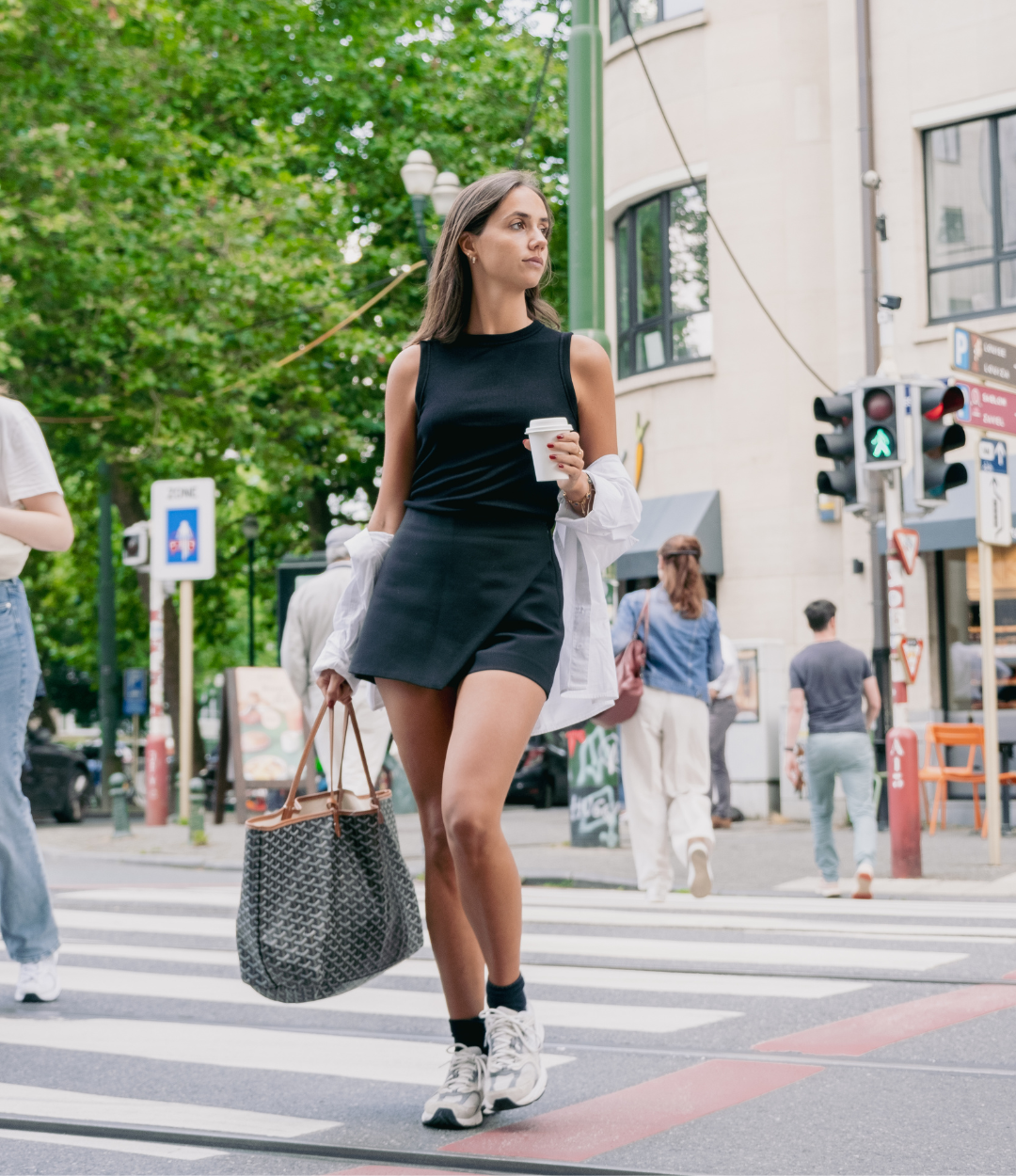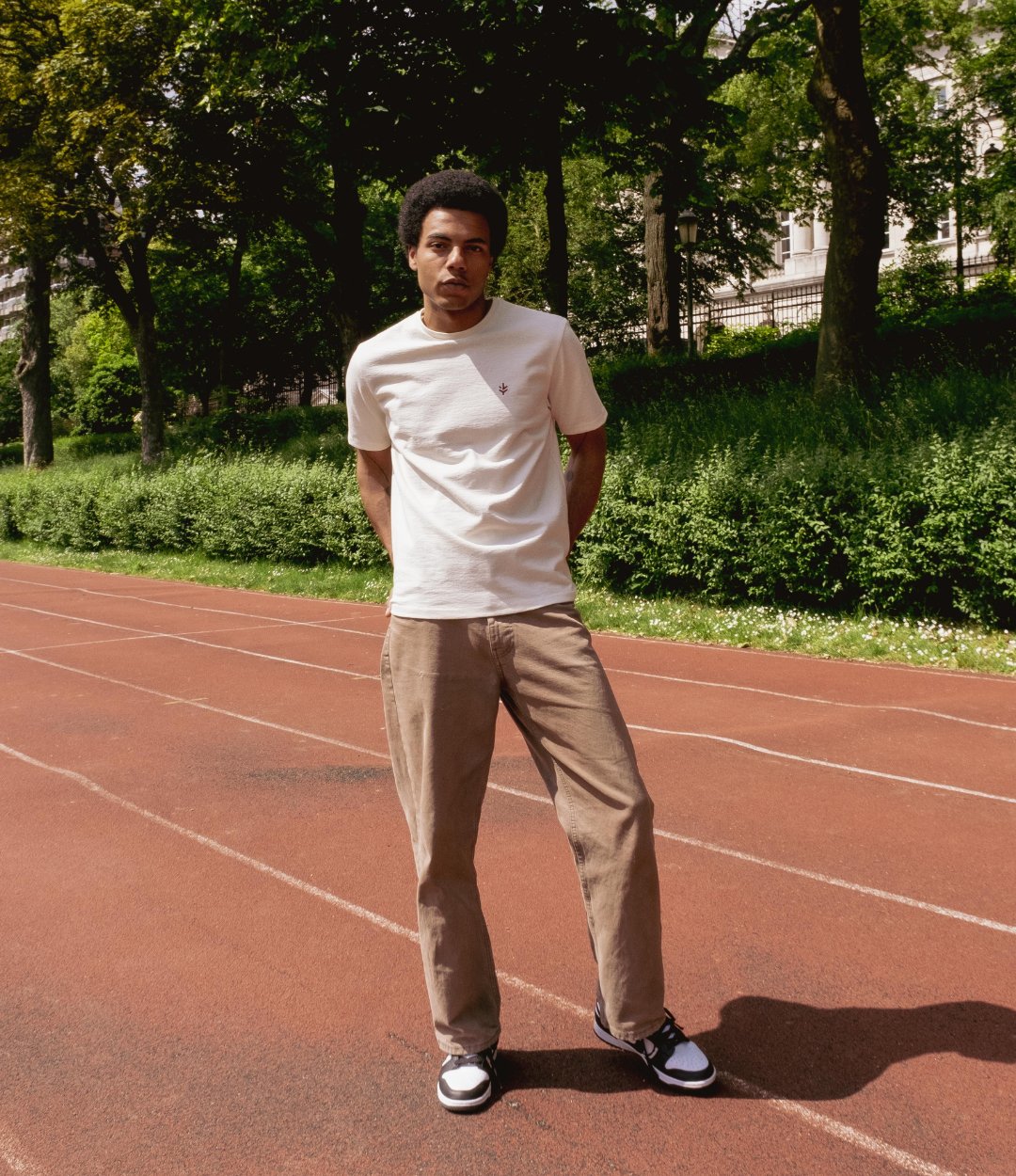

Made in Belgium is a term you've often seen on chocolate or beer, but probably never on clothing. Or at least not often enough. And yet, Belgian fashion is full of gems to wear, not just to eat! Between renowned Belgian couturiers and promising young Belgian designers, the focus in this flat country is on quality, unique creations, and a true sense of responsibility .
And because unity is strength (did you know that was the motto of Belgium?), we've compiled the best of Belgian, sustainable and ethical clothing brands, so that everyone can dress while supporting the local economy.
Top 10 Belgian fashion brands
Among our national gems, we find:
1. Lucid Collective
Lucid Collective is a young Belgian brand that actually manufactures its clothing in Belgium , in sheltered workshops and social reintegration programs . They offer garments made from recycled materials (cotton, wool) or very low-impact materials like linen, and prioritize the expertise and artisanal quality of their local workshops. By focusing on a simple and timeless aesthetic , they hope to convince as many people as possible that buying made in Belgium means buying clothes that will last . Why make things complicated when you can keep them simple?
2. Jacmin style
Founded by Alexandra and Ségolène Jacmin, Belgian twin sisters with a passion for fashion and architecture, Façon Jacmin offers unique creations while carefully selecting its textiles . Each piece blends contemporary creativity, artisanal craftsmanship, and environmental awareness through upcycling, European production, and timeless collections.
3. FAM The Label
FAM offers a women's wardrobe with effortless elegance, featuring limited collections that prioritize eco-friendly materials such as Tencel and organic cotton . Behind this Belgian brand lies a desire to slow down fashion, promoting mindful consumption without sacrificing style.
4. Howlin'
Specializing in handcrafted knitwear, Howlin' (which means "that smells" in Scottish dialect) values traditional knitting techniques inherited from Scotland and Ireland . Each piece is designed to last, and some are even made in Belgium.
5. Meson
Annabelle and Thaïs invite you to their home: they repurpose household textiles destined for the trash, transforming them into sustainable clothing made in Belgium . Each capsule collection features unique creations crafted from textiles found in a specific room of the house. For example, a bucket hat made from bath towels. Personally, we love it.
6. Sé-em
Charlotte, the designer, aims to upcycle as much unused or discarded textile as possible. With small collections and genuine expertise (Charlotte is a graduate of La Cambre), Sé-em offers something thoughtfully designed.
7. AMA Studio
An original offering in this top ten: made-to-order clothing. Based in Ghent, Studio AMA transforms surplus textiles from local industry into unique pieces, crafted in social workshops in Flanders. So yes, it's primarily for those with patience. But it's a great way to develop minimalist fashion and avoid overstocking.
8. HNST Jeans
In Antwerp, HNST (pronounced "honest") is revolutionizing local denim with recycled and sustainable materials. Using recycled cotton and innovative manufacturing techniques, the brand tracks every step of production to minimize waste, emissions, and water consumption. Production is based in Europe.
9. Valalab
Similar to Méson, Valalab recycles textiles from your home to create colorful gems . Lara handcrafts each piece in Brussels and even occasionally offers sewing workshops. It's high-quality, Belgian-made craftsmanship!
10. Nu Oceans
The only shoe entry in our top picks, Nu Oceans is revolutionizing the sandal world. Founded in part by a Belgian, Hadrien, this young brand incorporates recycled flip-flops that were polluting the world's beaches to create ultra-comfortable, durable, and ethical sandals.
Why choose Belgian and sustainable clothing?
Belgium is often overshadowed by its neighbors (as in the 2018 World Cup, yes, the resentment is still there), and yet, this flat country possesses an unsuspected creative wealth. From Ghent to Antwerp, designers have been redefining the rules of the game since the 1980s , merging audacity and tradition.
Today, a breath of fresh air is blowing through Belgian fashion: ethical, local fashion that challenges production standards. Let us explain what makes Belgian fashion unique and why it's high time it received the recognition it deserves.
If you're too lazy to read everything
🌍 Belgium is a major player in fashion, with avant-garde designers like the "Antwerp Six" and contemporary talents who propel innovation.
👗 Belgian designers combine boldness and artisanal know-how to offer original and sustainable fashion.
♻️ Belgian fashion prioritizes recycled materials, local production, and transparency. Brands like Lucid Collective, Façon Jacmin, and HNST are redefining standards.
🏙️ Producing in Belgium supports the local economy, preserves jobs and reduces environmental impact through short supply chains.
🔄 A 100% recycled Belgian brand, made locally, with a timeless aesthetic, which is part of a "slow fashion" approach.
How does Belgian fashion stand out internationally?
When we talk about fashion, we often think of fashion week, cities like Paris, Milan, or New York. Belgium isn't necessarily the first country that comes to mind, and yet!
Even in the Middle Ages, cities like Ghent and Bruges distinguished themselves through their textile expertise , particularly in lacemaking. But it was especially in the 1980s, with the arrival of the famous "Antwerp Six," that Belgium truly shone on the international fashion scene . Trained at the Royal Academy of Fine Arts, designers like Dries Van Noten , Ann Demeulemeester, and Martin Margiela established an avant-garde aesthetic blending conceptual rigor with meticulous attention to detail.
We actually make our 100% recycled wool sweaters in the same place as some of Dries Van Noten 's pieces, in our Flemish workshop. Pretty classy (for him).
Today, the country continues to innovate with talents like Raf Simons, Marine Serre or Glenn Martens, and with a solid ecosystem: cutting-edge boutiques and galleries, trade shows (like Mode-Belge) and quality local production.
As a result, Belgium stands out as a creative laboratory where experimentation, sustainability, and artisanal know-how coexist, thus occupying a unique and respected place in the fashion world. This is thanks to the government's "Textile Plan" (1982-1985), which revitalized the Belgian textile industry through innovation. By supporting young talent, it propelled the Antwerp Six to the forefront of the industry.

What is Belgian fashion?
Apart from a few brands with growing international renown (whose names we will not mention here), Belgian fashion is above all a multitude of designers and collectives who are working to revive the textile industry that was once the pride of the kingdom.
Far from large factories, Belgian fashion relies on family workshops and small manufacturers : weaving mills in Flanders, knitwear workshops in Kortrijk, and sheltered workshops in Hainaut. This allows designers to experiment quickly while guaranteeing decent working conditions, superior quality, and support for the local economy.
That's precisely why at Lucid, we produce our clothes in sheltered workshops in Hainaut, in a social reintegration workshop in Brussels, and in a family workshop in Flanders . We want to be able to verify who makes our clothes and how. Let's just say we know the first names of all the workers who make our clothes.

How do these brands contribute to the local economy?
Did you know that over 90% of the clothes we Europeans consume are imported from countries outside Europe ? Yes, look at the label on your jeans; chances are it's " Made far away ." And when you consider that it was only 30% in the early 2000s , it's chilling.
You might wonder what the problem is. The fact is , the further a garment travels, the greater the lack of transparency surrounding its production conditions . And that's where major brands take advantage to cut costs to the bone (to maximize their profits) by imposing appalling working conditions on their employees and opting for highly polluting materials . Fast fashion, your ruthless world.
The Belgian brands in the top 10 we suggested are among the ever-growing number that have decided to choose local and sustainable practices to ensure the conditions behind the manufacture of their clothing.
Recycled materials and low impact, total transparency on manufacturing, positive social impact, short supply chains: today, buying made in Belgium means choosing conscious consumption and responsible fashion that is less damaging to the planet and supports the local economy.

Source: https://www.instagram.com/p/DIyrtV9Mdlr
The impact on the local economy? Producing close to home keeps workshops running, maintains skilled jobs, and injects value directly into our neighborhoods. Shorter supply chains, less transport, more resilience: every garment created here nourishes an ecosystem where artisans, suppliers, and local businesses thrive together.
Not to mention the more controlled working conditions and wages, which ensure a much higher ethical standard in manufacturing . And it's certainly nice to know that the people who make our clothes can go home at a reasonable hour, with enough to live decently for their families, rather than being exploited.
A concrete example from us where we detail this whole virtuous circle in the " Supporting the local economy " section of our Our Manufacturers page.
Belgian fashion brands are waking up
But the good news is that awareness is growing. More and more consumers are questioning the current textile industry model, seeking to understand what's really behind the label, and making choices more aligned with their values.
We can really feel it at Lucid, more and more of you are coming to challenge the textile industry with us.
Faced with growing awareness, more and more brands are deciding to do things differently . No more vague promises: now it's all about transparency, ethics, and responsible creativity . These brands are making commitments on all fronts: choosing sustainable materials ( recycled cotton , organic cotton , linen , recycled wool , Tencel , recycled polyester ), local or European production, certifications, more modest production models, and so on.
At Lucid Collective we want to prove that it is possible to create clothes without creating problems and above all that it should be accessible to buy quality clothes without compromising one's values and being certain of the conditions in which they were made .
Sources:
I buy Belgian. (nd). Directory "Women's Fashion / Clothing" . I buy Belgian. Retrieved from https://jachetebelge.be/fr/marques-belges?cat%5B0%5D=mode-mode-femme-vetements
Ecoconso. (n.d.). Where to buy eco-friendly clothing or textiles in Belgium? Ecoconso. Retrieved from https://www.ecoconso.be/fr/content/ou-acheter-des-vetements-ou-textiles-ecologiques-en-belgique
Belgien.net. (n.d.). Fashion and design in Belgium . Belgien.net. Retrieved from https://belgien.net/fr/mode-et-design/
Madame Figaro. (2015). Belgium, a fashionable story . Madame Figaro. Retrieved from https://madame.lefigaro.fr/style/la-belgique-une-histoire-a-la-mode-050615-96860
Belgae. (nd). History and chronology of Belgian fashion . Belgae. Retrieved from https://www.belgae.be/fr/blog/histoire-et-chronologie-de-la-mode-belge/?v=910955a907e7
DNA. (n.d.). The Revenge of Local Brands . DNA. Retrieved from https://www.ladn.eu/archives/ecole-de-la-marque/la-revanche-des-marques-locales/
achACT. (2020). Covid-19: Is relocation the solution? achACT. Retrieved from https://www.achact.be/covid-19-la-relocalisation-est-elle-la-solution/
achACT. (nd). Issues . achACT. Retrieved from https://www.achact.be/enjeux/
Fil Rouge. (n.d.). Relocating the textile industry: a necessity… . Fil Rouge. Retrieved from https://filrouge-mode.fr/actualites/relocalisation-textile-mode-ethique-responsable/
Solutions Will. (n.d.). 5 reasons to buy local and support the local economy . Solutions Will. Retrieved from https://solutionswill.com/5-raisons-dacheter-local-et-de-soutenir-leconomie-locale/